Artificial intelligence is changing business at a rapid pace.
It can summarise meetings, compare suppliers, produce professional marketing material in minutes and even draft proposals. This is useful. It saves time. It lowers the cost of many routine tasks.
But it also makes one old truth easier to see.
Serious business is still built on trust. And trust is still built between people.
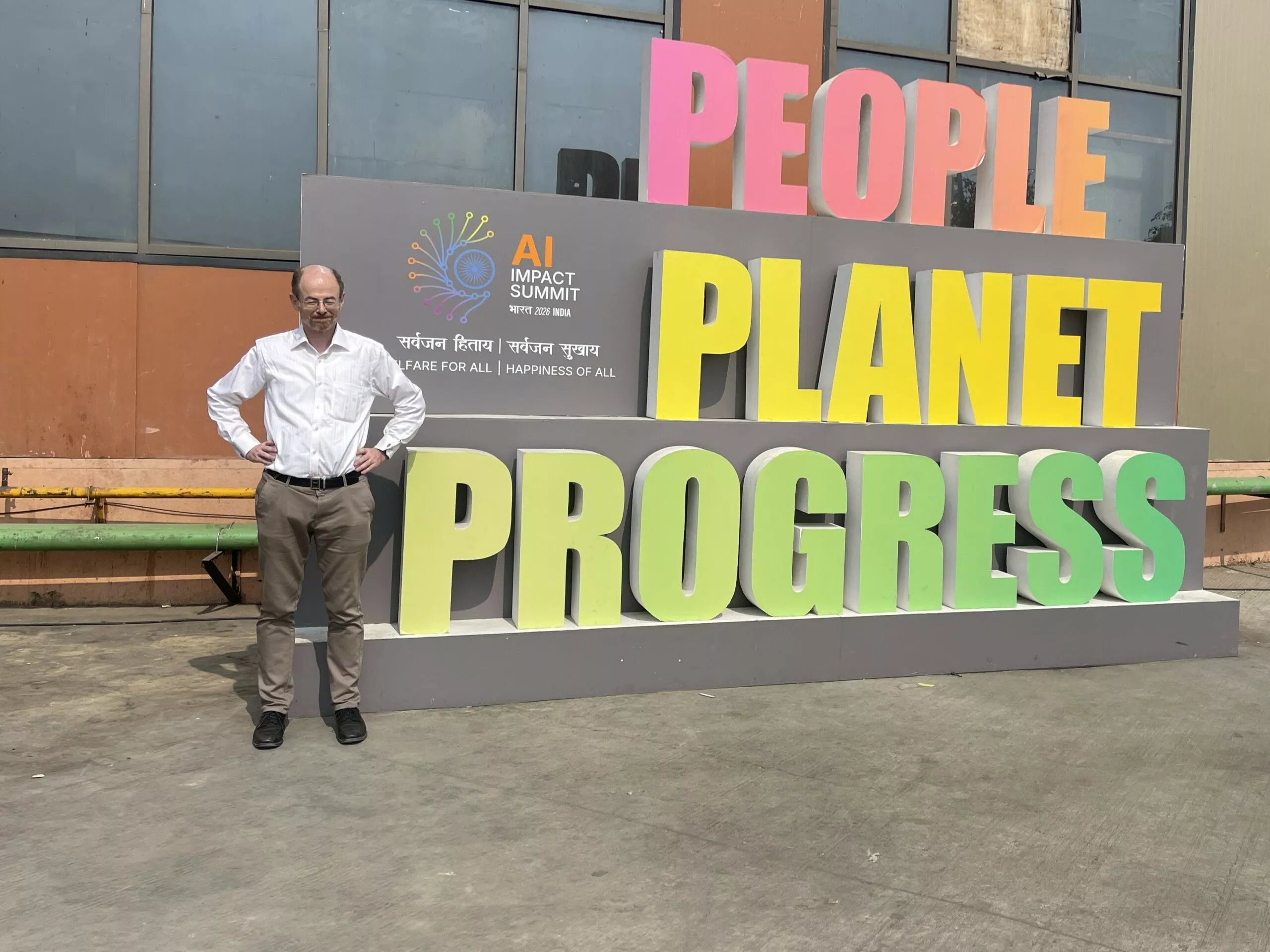
Over the years, I have met many potential clients at conferences, trade events and professional gatherings.
Sometimes the first conversation was brief.
Sometimes it was a longer exchange after a session, over coffee, or in one of those small pauses where people speak a little more freely than they do in formal meetings. A few of those conversations led nowhere, which is perfectly normal.
But many of the most valuable business relationships in our company began in just that way.
Surprisingly often, the first person I met did not become a client.
Instead, that person formed a view of how we think and work, and later introduced us to someone else who became a client. In many cases, business came through a contact who recommended us. Sometimes years after we met. In fact, that is true for a number of our present clients. People do not make such introductions lightly. When they do, they are putting a little of their own standing behind you. That only happens when trust has already begun to form.
That is how many good businesses actually grow.
This does not mean traditional marketing has no value. It clearly does. A company needs to be visible. People need to understand what you do. Your website matters. Your articles matter. Case studies matter. Search visibility matters. Presentations, follow-up mails, and social media all have their place.
But they are not enough on their own.
Marketing can help someone find you. It can help explain your offer. It can make you look credible. What it cannot do, at least not by itself, is create the kind of confidence that makes someone place an important part of their business in your hands.
That confidence usually comes from a personal connection.
It comes from conversations. From repeated contacts. From the sense that the other side is not merely trying to win an order, but is serious about creating something worthwhile and serious about the relationship as such. Without that, there may still be a deal. But without a genuin relationship, there will rarely be a durable relationship.
Where the formal RFP model falls short
The formal RFP and proposal process assumes objectivity. There is merit in that. It can create structure. It can reduce arbitrariness. It can help clients compare suppliers on paper. But it is most suitable when the customer knows what they want and several suppliers are capable of providing the deliverable.
But in software projects, this model often carries a hidden cost.
Before suppliers can bid properly, the client must define what is wanted. That sounds sensible, yet it often happens too early. The client is forced to describe a solution before enough has been learnt. Requirements are written down in a form that may be clear enough to send out, but still rough, incomplete, or shaped by assumptions that should have been challenged.
That effort does not come free.
The client spends considerable time trying to define the objectives, scope, priorities and expected outcome. In many cases, that work takes up a significant share of the total project cost before development has even started.
Then the suppliers must do their part. A serious supplier cannot simply glance at the document and send a price. They must analyse the material, identify gaps, estimate effort, assess technical and commercial risks, think through mitigation and prepare a proposal that is realistic enough to protect delivery. That also takes time and money. Several suppliers may go through that exercise in parallel, even though only one will be chosen. For certain types of projects this is required. It can reduce risk. But not for all.
So the process that looks disciplined and objective can be costly even before a single line of useful code has been written.
And the difficulties do not end there.
Once the project has been awarded, the structure itself often discourages creativity. If the supplier is tied tightly to a fixed specification, the pressure is to deliver exactly that while keeping costs down. Suggesting a better route, questioning an early assumption, or proposing a change that might improve the result can create commercial uncertainty. Under such a model, extra thought does not necessarily help the supplier, even if it would clearly help the client.
That is not because people are unwilling. It is because the structure points them in the wrong direction.
The same applies to change requests. In software projects, they are almost inevitable. Scope creep. New learning appears. Priorities shift. End users react in ways no one fully predicted. Something that looked sensible on paper turns out to be less useful in practice. At that point the supplier must stop, assess the change, estimate the consequences, request for a change of the estimate and wait for approval. The client must review it, discuss it, negotiate it and then decide whether to proceed.
A fair amount of effort is then spent not on building value, but on administering change.
Often there is a better way.
For many software projects, it is more sensible to start with a reasonably clear direction, a rough estimate, and an agreed margin of variation, perhaps a plus or minus percentage that covers ordinary change along the way. That gives both sides room to move without turning every small adjustment into a mini procurement exercise.
Such an approach reduces waste.
The client does not need to define every detail too early. The supplier does not need to cost every modest change as if it were a separate contract. Both sides can spend more of their energy on building the right thing.
Software is different
This is one of the important differences between software and many physical projects.
If you are constructing a building, major changes late in the process can be ruinously expensive or physically impossible. The structure must often be fixed quite early. Software is different. It is far more adaptable. Significant changes can often be made along the way, provided the work is organised sensibly.
That flexibility is one of software’s great strengths.
It is also one of the reasons rigid procurement models are often a poor fit.
Software projects tend to generate learning as they progress. End users behave differently from what was assumed. Internal workflows prove more awkward than expected. A feature that looked useful at the start turns out to be less important than another need that only became visible once people began using an early version.
If those lessons are brought into the work early, costly changes after delivery can often be avoided.
That is why software development benefits so much from partnership.
In a genuine partnership, both parties actively look for ways to create more value and reduce cost as the project moves forward. The supplier is encouraged to speak openly about better options.
The client is willing to refine the direction as new understanding emerges. Both sides care about the long-term result, not only about defending their position in the original paperwork.
With that kind of relationship, the value rises for both.
The client gets a better and more durable solution. The supplier gets the chance to do better work in a healthier commercial setting. And the project has a better chance of becoming a practical success rather than merely a contractual one.
Creativity needs trust
The “cold” proposal process assumes that enough objectivity can be created through documents, scorecards and pricing tables. To some extent that may be true. It can help sort out the careless from the competent. But it comes with a price tag.
Real creativity is rarely born there.
Creativity instead grows in a relationship where both parties see the engagement as a win for both sides – win/win. Where both parties are jointly working to create value and cost-effectiveness for the client while fair earning for the supplier.
That is what true business should be.
A partnership does not mean vagueness. It does not mean lack of discipline. It means that the relationship is strong enough to allow honest discussion. A supplier can say, “This part is not worth the money.” A client can say, “We have learnt something new and should change course.” Both sides can look together for a better answer.
That sort of conversation is only possible where there is trust.
And trust is still built in very human ways.
It is built over time. It is built through repeated conversations. It is built when people find that the other side listens, understands, keep their word and behaves fairly when something is difficult.
That is why conferences and professional gatherings still matter. They are not merely places to collect business cards or exchange LinkedIn connections. They are places where people begin to judge one another properly.
Quietly. Gradually. Enough to decide whether a further conversation is worth having.
Many of the best business relationships are born in this manner.
What our own experience has taught us
When I look at our own journey, I see this pattern over and over again.
One good example is the thread that connects ArchOver, Skin & Tonic and the work we are now doing in yet another constellation with the same person – a serial entrepreneur that I first met more than 25 years back, when he was finance manager at one of our client. We stayed in touch over time. Later, that relationship became part of the background to ArchOver. It also played an important role in Skin & Tonic. And today we are working together again in yet another startup.
That is not a coincidence.
It is how trust works when it has had time to grow. The original meeting did not lead to one neat transaction and then end there. Instead, a relationship developed over years, across different businesses, different needs and different stages of growth. That is far more revealing than any polished sales process. It shows how real confidence is built. If people have seen how you work, and if the experience has been good, they tend to come back. Or they introduce you elsewhere. Or they bring you in when something important needs to be done quickly and well.
That same pattern can be seen across many of our client stories.
- I met a young person from Sweden, who was working as an intern here in Chennai. He introduced me to Hans Sollerman and we became connections on LinkedIn. In 2011 he contacted me, in 2012 we signed a partner agreement and started to work with blended outsourcing of integration services for Scandinavian Airlines. The relationship continued over the years and Hans company got acquired by what is today Epical Group who has been one of our largest client over many years.
- We were introduced to the European Association for cardio-thoracic Surgery (EACTS) by an old client in the UK. It took a few years for us to get started but after that we collaborated with the association on requirements, design, development and launch of a bespoke membership, conference and event management system. That is exactly the kind of project where a close working relationship and shared learning matter more than a narrow handover from specification to delivery.
- One person who was a developer working for one of our clients moved on to become the IT director of what is today Kantar Media. In 2005 he contacted us and asked us to write some reports for one system. One thing led to another and we have worked with a number of systems for Kantar over the years. That is not a one-off procurement story. It is a story of trust growing through useful work over time.
- At an ITSMF conference I sat at the same table as Charlotte Ljungblad. She was using a Swedish consulting company to develop her product but was looking for another supplier. One thing led to the other, and now we have worked with Planter for many years, modernising the platform, working together to build a world class plant management system.
They are not stories about transactions. They are stories about relationships; collaboration, trust, shared learning and long-term value creation. In several cases, the work began with a modest assignment or an exploratory phase. In others, it began with a personal connection and grew from there. In still others, the relationship deepened because both sides were prepared to think together rather than simply defend a pre-written scope.
That is why I see all of those case studies as examples of the same principle.
They show that worthwhile software projects are rarely about one side writing requirements and the other side mechanically delivering against them. The better projects are those where both parties work together, learn together and refine the solution together. That is where more value is created. It is also where cost-effectiveness becomes more real, because waste is reduced and effort is directed towards what actually matters.
The quiet advantage
As AI makes more business output faster and cheaper, polished material will become less distinctive. More companies will be able to produce competent proposals, presentations and sales copy.
That is not a bad thing. But it does mean that these outer signs will tell us less than before.
When competence becomes easier to imitate, character matters more.
When information is abundant, judgement matters more.
When everyone can generate a polished first impression, the human relationship becomes more important, not less.
That is why I believe the human side of business in the age of AI is becoming a strategic asset. Not because technology has failed, but because it has become so good at standardising the surface layer
of business communication. What remains difficult to imitate is the slower process through which people come to trust one another.
That still happens in conversations.
It still happens through introductions.
It still happens at conferences, meetings, shared workshops and honest discussions about real problems.
It still depends on whether people feel that the other side is serious, fair-minded and worth building with.
Traditional marketing can support that. Good procurement can support that too. But neither can replace it.
Without trust, there may be a deal.
With trust, there is the possibility of something better.
There is an opportunity to build a lasting partnership that delivers greater value for everyone involved.
And ultimately, that is how we achieve real business results.