Where do you best start a journey of how I built Gislen Software into a successful IT company in India? My journey did not begin in an office. Instead, it started on a small farm in rural Sweden.
As a young boy, I spent my summers working for a neighbour, earning pocket money. But I also nurtured various interests. One of my hobbies was picking apart old radios and TVs, but I also built multiple electric devices. One thing led to the other. I was fortunate to discover my passion for computers early on. With the money I earned from farm work, I bought my first computer in 1980. I then taught myself programming, which led to small freelance projects. Gradually, I embarked on a career in IT.
As I balanced work and studies, my knowledge grew. From 1985 to 1986, I was part of a team that implemented data management for what would later become part of one of Sweden’s most important systems for public administration—PROSIT. Today, it is now known as Raindance. I was also fortunate to work with prominent clients like the Stockholm Municipality.
Coming to India
Together with a friend, I went for a short trip to India in 1991. I got inspired and wanted to see more. Therefore, in 1992, my wife and I decided to travel around Asia—a trip that would change our lives. During our time in India, we realised that India was where we wanted to build our future. Taking a leap of faith, we moved to India—a decision that would forever alter our path. Getting the company off the ground took a year, and our beginnings were modest. We embarked on a journey without knowing how far it would take us.
While India had recently started its market liberalisation journey, the bureaucracy was still challenging, and acquiring information about the registration process was hard. I went to many different government offices to get the required information. Having made up my mind about not paying any bribes, the process took longer than what would otherwise have been the case. After many bumps in the road, we received permission to start an export business in April 1994. With this in hand, we could register a private limited company. On September 15, 1994, Gislen Software was finally registered with the Registrar of Companies in Madras.
Modest start
The internet was still in its infancy, creating its challenges. My personal consulting work for a few Swedish clients contributed significantly to building up working capital in the early days. But through grit, persistence, and a willingness to take risks, we acquired our first few clients, including Enera, X-change, and Programma Electric, for whom we created advanced software for high-voltage test equipment.
The dot-com boom in the late 1990s helped us grow the business very fast. Demand for digital solutions exploded, and our company thrived. But the euphoria of that period was short-lived, as the inevitable crash brought economic turmoil, exacerbated by the tragic events of 9/11. The years that followed tested us in ways we couldn’t have imagined. It felt like we were living through a modern-day version of Joseph’s biblical journey—years of abundance followed by years of extreme scarcity.
Yet, unlike Joseph, we were not prepared with clear guidelines from dreams. We kept the company alive through hard work, sacrifices, and determination. During these darkest moments, we developed resilience as the core of our organisational DNA.
Our largest project
In 2004, an opportunity arose that would change everything. Our partnership with Norwegian Q-Free was the turning point, a lifeline that pulled us out of the challenging times. In just one year, our work for Q-Free accounted for a significant portion of India’s software exports to Norway. This wasn’t just a financial achievement but a reflection of our growing expertise and capacity to weather the most brutal storms. We had to borrow resources from a few other companies, but we got our act in order and jointly delivered our parts of the system. Those trying years gave us the fortitude to build reserves, preparing us for the future.
Building the reputation as a successful IT company
Since then, we have built our reputation as a reliable IT company by consistently refusing to take shortcuts and delivering the best possible solutions for our clients. Every project we undertook was approached with a commitment to excellence, ensuring long-term success over short-term gains.
We have also built our technical and professional skills. We know it is hard to find reliable suppliers who understand their needs, have the required technical skills, and never compromise on quality. Therefore, we offer a wide range of services to clients who want to reduce their IT risks and succeed with IT outsourcing. We constantly learn new technologies but always focus on how technology can create value for our clients. Our clients should always feel that their supplier meets their expectations.
In parallel, we recognised that a healthy, happy team is critical to delivering outstanding results as a reliable IT company. We prioritised our employees’ well-being, promoting work-life balance, continuous learning, and a supportive environment. By investing in our clients and people, we cultivated trust and reliability, values that continue to drive our success today. We provide many different services, including software development, cloud solutions, cyber security, artificial intelligence, e-commerce, and systems integration, and have an impressive track record of serving several impressive clients.
We have also built a solid relationship with Epical Group to deliver industry-leading blended service offerings. Jointly, we have an outstanding track record of serving some of Sweden’s largest companies. Together, we provide world-class integration solutions using blended outsourcing and joint support services. We can also, jointly with Epical, offer a 24×7 service desk, proactively monitor your systems, and much more. We are proud to be ISO 9000 certified, a Microsoft Certified Partner, and an award-winning IT service company.
Focus on Sustainability
But survival wasn’t the only focus of our journey. From the beginning, we committed to creating a successful IT company and a company grounded in solid values—ethical business practices, a flat organisational structure, and a genuine desire to make a positive impact beyond profits.
In 2013, we took a significant step by converting our Chennai office to run on solar power and batteries, drastically reducing our carbon footprint. Today, we offset three times the amount of our remaining carbon dioxide emissions and are well on our way to becoming net Carbon Neutral by 2030. For us, sustainability isn’t virtue signalling or a box to tick; it’s a deeply held belief that we must do our part for the planet.
Our solar plant has improved our reputation. When calamities have hit us, be it flooding in Chennai or the pandemic, the solar plant has helped us by ensuring that we have an uninterrupted, low-maintenance power source under our control and that we have not had to be dependent on the electricity grid.
Social responsibility
We are not just an IT company; our commitment to social responsibility is equally vital. In 2005, we started the Little Lambs Educational Trust, which runs a school for underprivileged children. Initially, we had just four children, including my eldest son. Today, the school has nearly 300 students and supports around 50 more pursuing further education or vocational training. Our financial, logistical, and emotional involvement is a cornerstone of our mission to give back. This school is not just a project; it’s a testament to our belief that education can change lives and that businesses can be forces for good in their communities.
Celebrating 30 years of success
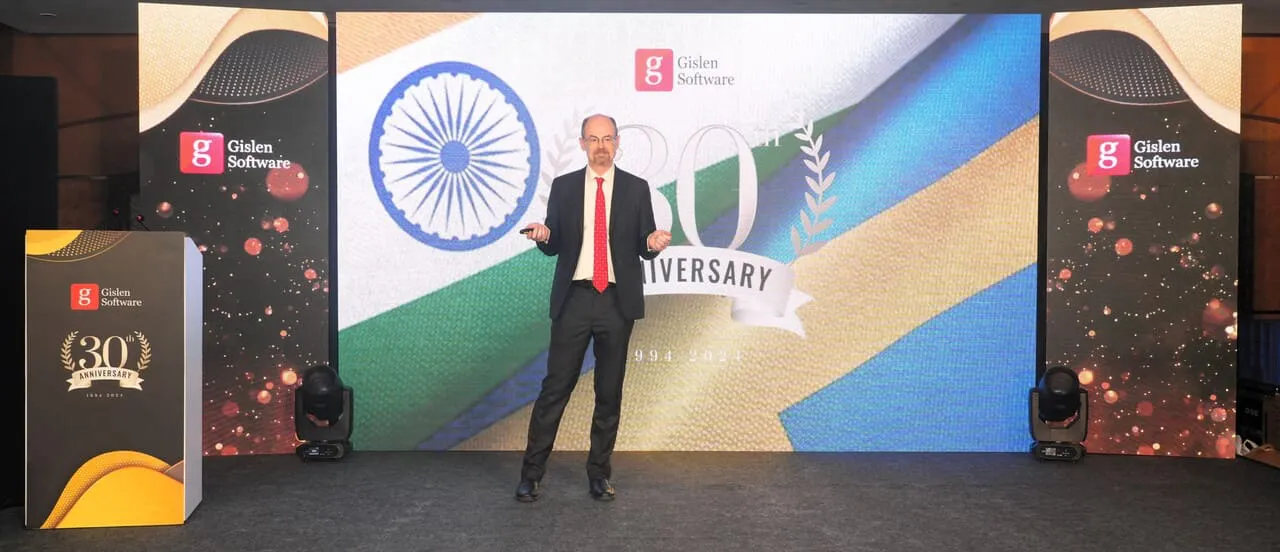
When I write this, we have just celebrated Gislen Software’s 30th anniversary. I hope our journey—rooted in values, perseverance, and an unwavering commitment to integrity and high quality—will inspire others. What we have built is more than just a company; we have created proof of what can be achieved when purpose and resilience guide a business while striving to positively impact the world.
The journey is not over; there are many areas we can still improve and become an even better company. This journey has been enriching, not only for me but also for my remarkable Indian team. With optimism, we look ahead to the future, eager to embrace new challenges and celebrate fresh victories along the way.
Look no further if you want to find a reliable IT company to support your business. We can assure you of high quality, but we believe it will also mean cost savings compared to European IT service providers. Contact us today. We are ready to serve, walk the extra mile, and add the finishing touches!
When was Gislen Software founded and where did the journey start?
Gislen Software was registered on September 15, 1994 in Madras (now Chennai area is referenced elsewhere in the story), but the founder’s journey started earlier on a small farm in rural Sweden. An early interest in electronics and computers led to buying a first computer in 1980, self-learning programming, and small freelance projects—steps that gradually became a career in IT.
What did Mikael Gislén do before starting the company in India?
Before founding Gislen Software, Mikael combined work and studies, built programming skills, and did early professional IT work. During 1985–1986, he helped implement data management for what later became part of Sweden’s public administration system PROSIT, now known as Raindance. He also worked with clients such as the Stockholm Municipality, which shaped his experience before moving to India.
Why did Mikael and his wife choose India, and what triggered the move?
A short trip to India in 1991 sparked inspiration, followed by traveling around Asia in 1992. During their time in India, they realized it was where they wanted to build their future and decided to move. The story frames it as a leap of faith: starting the company took about a year, and the early phase was modest with uncertainty about how far the journey would go.
How was Gislen Software registered, and what challenges did the founder face?
Company registration in India was challenging due to bureaucracy and difficulty getting clear information on the process. The founder describes visiting many government offices and deciding not to pay bribes, which made the process take longer. After setbacks, permission to start an export business came in April 1994, enabling registration of a private limited company, and Gislen Software was registered in Madras on September 15, 1994.
How did the company survive the early years when the internet was still new?
In the early days, the internet was in its infancy, which created practical challenges. Early working capital was supported significantly by Mikael’s personal consulting work for a few Swedish clients. The company then acquired initial customers such as Enera, X-change, and Programma Electric, including advanced software for high-voltage test equipment—growth built through persistence, risk-taking, and gradual client wins.
Dot-com boom vs dot-com crash: how did it impact Gislen Software?
The late-1990s dot-com boom accelerated growth as demand for digital solutions exploded, and the company thrived during that period. The crash that followed—combined with broader turmoil and the events of 9/11—created a harsh downturn that tested the company. The founder describes surviving through hard work, sacrifices, and determination, and says those years built resilience into the organization’s core DNA.
What was the turning-point project, and why was it so important?
A major turning point came in 2004 through a partnership with the Norwegian company Q-Free. The story describes it as a lifeline out of difficult times and a proof point for growing expertise and capacity. The team borrowed resources from a few other companies, then “got our act in order” and jointly delivered their parts of the system, later using those lessons to build reserves for the future.
Quality-first vs shortcuts: what defines your approach as a “reliable IT company”?
Reliability is tied to consistently refusing shortcuts and prioritizing long-term success over short-term gains. The founder describes a commitment to integrity and high quality across projects, aiming for clients to feel expectations are met. The company also emphasizes building technical and professional skills and focusing on how technology creates value—positioning services as a way to reduce IT risks and succeed with IT outsourcing.
What services are mentioned, and who are they meant to help?
The services including software development, cloud solutions, cyber security, artificial intelligence, e-commerce, and systems integration. These are positioned for clients who want to reduce IT risks and succeed with IT outsourcing, with a consistent emphasis on using technology to create business value. The narrative also ties delivery quality to team well-being, work-life balance, continuous learning, and a supportive environment.
What does the partnership with Epical Group include, and how is it positioned?
The relationship with Epical Group is described as a way to deliver “blended service offerings” and integration capability, with a track record of serving some of Sweden’s largest companies together. The text mentions providing integration solutions via blended outsourcing and joint support services. It also states they can offer, jointly with Epical, a 24×7 service desk, proactive monitoring, and more—positioned as part of a broader IT service offering.
How does sustainability show up in operations, not just statements?
Sustainability is described through concrete operational changes, including converting the Chennai office in 2013 to run on solar power and batteries to reduce carbon footprint. The company says it offsets three times the remaining carbon dioxide emissions and aims to be net carbon neutral by 2030. The solar plant is also described as practical resilience—helping maintain uninterrupted power during flooding in Chennai and during the pandemic without dependence on the grid.
What is Little Lambs Educational Trust, and how does it fit the company mission?
Little Lambs Educational Trust was started in 2005 and runs a school for underprivileged children. It began with four children and is described as having nearly 300 students today, plus support for around 50 more in further education or vocational training. The founder frames this as a core part of giving back—financially, logistically, and emotionally—and as evidence that businesses can be forces for good in their communities.