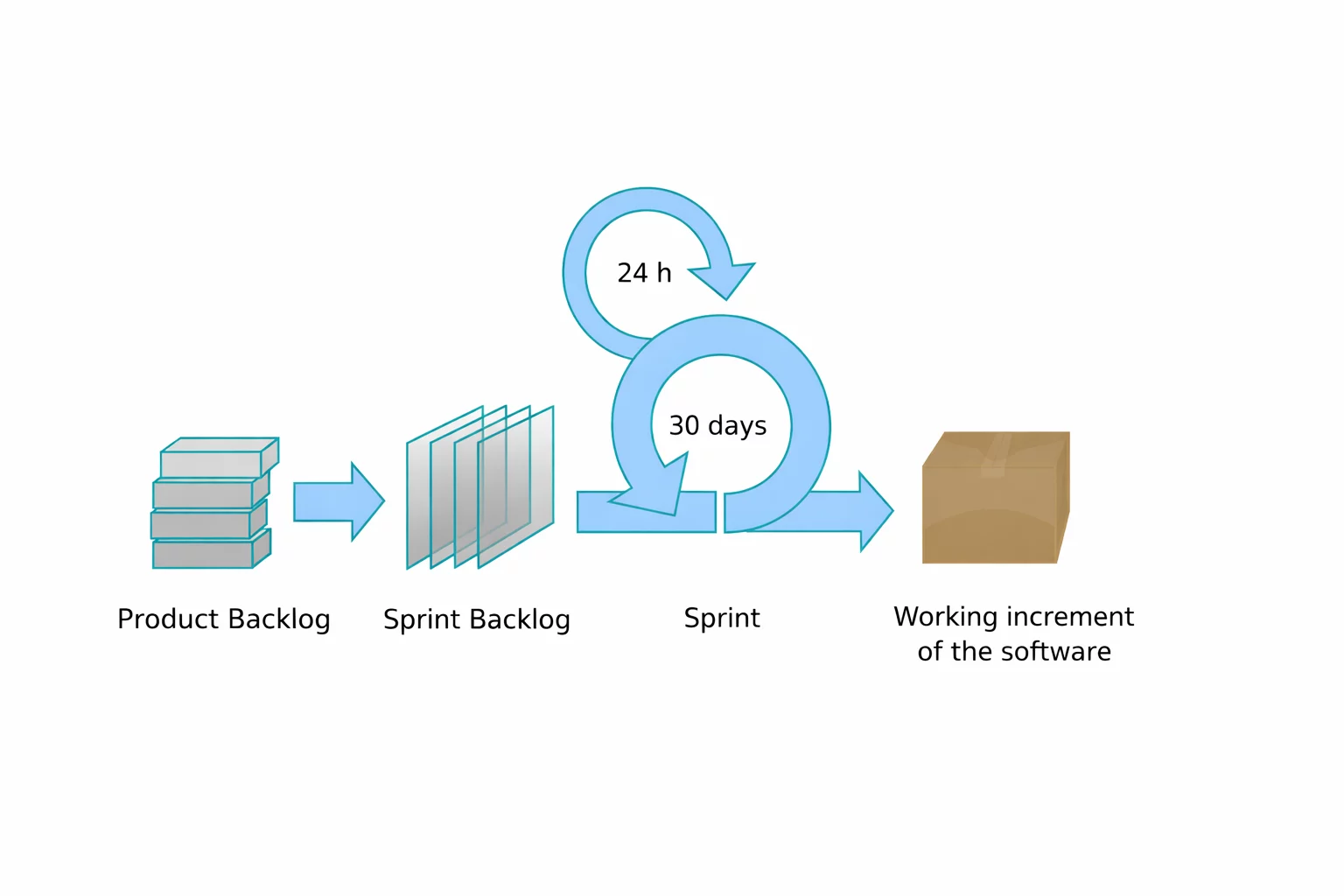

Agile has been mainstream for years, but many organisations still struggle to get the benefits they expected. Not because Agile “doesn’t work”, but because teams adopt the rituals without the outcomes: faster learning, clearer priorities, and reliable delivery.
Today, Agile works best when it is treated as a product and delivery operating model, not a project methodology. That means short feedback loops, empowered teams, and a steady cadence of value — supported by strong engineering practices and clear governance.
This article on using Agile Development is completely updated from the earlier version
What does agile development mean?
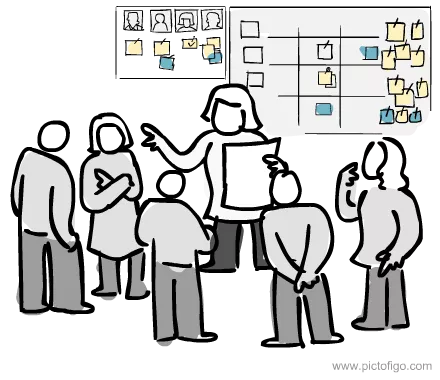
Agile is an approach to building products where you reduce risk by learning early and often. You work in small steps, validate assumptions with real users, and adjust direction as you go — rather than betting everything on a perfect plan upfront.
Most organisations combine practices from several methods, such as:
- Scrum (a lightweight framework for product development)
- Kanban (flow-based work management, useful for support and continuous improvement)
- Lean thinking (focus on value, reducing waste, improving flow)
- Extreme Programming (XP) practices (strong engineering discipline: testing, refactoring, continuous integration)
How does an Agile team work?
Agile teams are generally self-organised and empowered to achieve business objectives without a project leader or managers guiding them. Also, agile teams frequently deliver fully functional software, so there is a fast feedback loop. With shorter feedback cycles, agile reduces the risk of misunderstanding requirements. This way, customers and users can correct issues early and avoid challenges late.
A modern Agile team typically:
- works from a prioritised product backlog
- delivers in small increments
- uses frequent reviews to validate value and direction
- holds retrospectives to continuously improve
- has a clear Definition of Done and quality standards (as emphasised in the Scrum Guide)
When using agile development, frequent feedback from customers or users ensures that such things are found early. Continuous feedback loops also help the team to try out ideas and see what works. Issues are found earlier in the project, which reduces overall project risk and stimulates innovation.
Agile is not the same as traditional iterative development. Traditional development methodologies assume that requirements are defined at the beginning of the project. In agile methods, the focus is on “learning” what should be done. The philosophy is that it is impossible to know what works, so it must be tested. It can be seen as constant piloting and correcting using double-loop learning at every process step. It reduces risks and costs from start to end.
Scrum is the most used agile development method; substantial evidence shows it works. Scrum was first mentioned in a landmark 1986 paper and was developed during the 1990s. The Agile Manifesto was defined in 2001, and we also have a special page about Agile Development.
Just as importantly, Agile today is closely linked with DevOps and continuous delivery, because fast learning depends on being able to ship safely and frequently. Many organisations measure this with DORA metrics (deployment frequency, lead time for changes, change fail rate, time to restore).
How do you start using Agile development?
Change is hard, so the best way to start is usually small, protected, and measurable:
- Pick one product or one team with a real business sponsor.
- Define outcomes, not just output: what will be better in 8–12 weeks (cycle time, predictability, quality, customer feedback, etc.).
- Establish a weekly delivery cadence (even if you don’t release weekly, you should be able to).
- Keep roles clear (product ownership, team accountability), and keep dependencies visible.
- Make work transparent: a backlog that reflects reality, not wishful thinking.
- Invest in engineering discipline early (automated testing, CI, code review, observability). This is where many “Agile” adoptions succeed or fail.
If you’re in a regulated environment (or you have ISO requirements), Agile still works — but you’ll want to be explicit about governance: decision logs, traceability, quality gates, and “definition of done” aligned with compliance.
Is there evidence that Agile is better?
Software delivery is difficult to compare in a laboratory sense, and Agile is not best for every situation. But the wider industry experience is clear on two points:
- Agile adoption is widespread, and most organisations use customised or hybrid approaches rather than “pure Scrum”.
- High-performing teams tend to pair Agile ways of working with strong delivery and engineering capabilities, often measured using DORA-style metrics. ThoughtWorks has a good overview of the four key metrics:
If you want a regularly updated snapshot of trends and adoption patterns, the long-running State of Agile report is a practical reference.
How long does it take to “become Agile”?
You can usually see meaningful improvements within 3–6 months, but “becoming Agile” is not a finish line. The early wins often come from:
- clearer priorities (less thrash)
- shorter feedback cycles (less rework)
- better technical hygiene (fewer late surprises)
The hardest part is rarely Scrum events. It’s usually:
- too many priorities at once
- dependencies across teams
- weak product ownership
- lack of investment in test automation and release discipline
- leadership expecting certainty while asking for agility
A practical starting plan
If you want a simple, low-risk starting point:
- Read the Scrum Guide (it’s short).
- Train one Product Owner and one Scrum Master/Agile Lead (certification is optional; capability matters more than badges).
- Build a real backlog with a clear ordering and acceptance criteria.
- Run 2–3 short sprints (or a Kanban flow if it’s support/continuous work).
- Measure a few basics from day one: lead time, escaped defects, and how often priorities change mid-sprint.
- Add engineering practices immediately: CI, automated tests, and a definition of done that protects quality.
How we approach Agile at Gislen Software
Gislen Software is a Swedish-owned software company in Chennai, working mainly with clients in the UK and Scandinavia. We’ve used Agile ways of working for many years — and we’ve learned (sometimes the hard way) that Agile succeeds when it is paired with:
- Strong product thinking and stakeholder collaboration
- Disciplined engineering (testing, CI/CD, code quality)
- Pragmatic governance (especially for regulated or ISO-driven environments)
- A culture of continuous improvement, not blame
If you’d like, we can help you start with a pilot team, set up the delivery discipline around it, and make the results visible to the wider organisation.
Gislen Software is a Swedish-owned Agile software consulting company located in India. We work predominantly with clients in the UK and Scandinavia. Gislen Software has used Agile for almost ten years. We started without really understanding the paradigm. The result came once we got the hang of the agile philosophy. Over the last five years or so, we have learned to become more and more agile. Before we started our agile journey, there was a lot of stress and challenges.
While Scrum does not solve all problems, it certainly makes life simpler. We have found that a lot involves building an agile culture. In our experience, Scrum and agile development delivers! Contact us to discuss how we can do Agile together!
What does agile development mean in practice?
Agile development is a way to reduce delivery risk by learning early and often. Teams work in small increments, test assumptions with real users, and adjust direction based on feedback instead of relying on a “perfect” upfront plan. The goal is faster learning, clearer priorities, and more reliable delivery of working software.”.
Why do some Agile adoptions fail even when teams “do Scrum”?
Many teams adopt the rituals but miss the outcomes. If planning, stand-ups, and sprints don’t produce faster learning, clearer priorities, and dependable delivery, Agile becomes theatre. Common causes include weak product ownership, too many priorities, missing engineering discipline (testing, CI), and leadership expecting certainty while asking for agility..
Agile as an operating model vs a project methodology—what’s the difference?
As an operating model, Agile is about how products are continuously shaped and delivered: short feedback loops, empowered teams, a steady cadence of value, and governance that supports decisions and quality. As a project methodology, it’s often treated as a set of ceremonies inside a fixed project plan—without the learning and delivery capabilities needed to make it work.
Scrum vs Kanban—when should you use which?
Scrum is a lightweight framework suited to product development with timeboxed sprints, reviews, and retrospectives. Kanban is flow-based work management that fits well for support work and continuous improvement where work arrives continuously. Many organisations blend them, choosing the structure of Scrum or the flow focus of Kanban depending on the work type.
How does an Agile team typically work day to day?
A modern Agile team works from a prioritised product backlog, delivers in small increments, and uses frequent reviews to validate value and direction. It improves continuously through retrospectives and protects quality with a clear Definition of Done. By delivering working software often, the team gets fast feedback and reduces late-stage surprises.
What is a product backlog, and why does prioritisation matter?
A product backlog is an ordered list of work that reflects what matters most right now. Prioritisation matters because it drives focus, reduces thrash, and helps teams deliver valuable increments instead of spreading effort across too many competing demands. When the backlog matches reality—rather than wishful thinking—progress becomes more predictable.
What is a “Definition of Done,” and why is it critical?
A Definition of Done is a shared quality standard that clarifies what “finished” means for each increment. It prevents half-done work from piling up and makes delivery more reliable. When teams align on quality gates—testing, reviews, and readiness criteria—feedback becomes trustworthy and the risk of late rework and defects drops.
What’s a low-risk way to start using Agile development?
Start small, protected, and measurable. Pick one product or team with a real sponsor, define outcomes (predictability, quality, feedback), and establish a weekly delivery cadence—even if releases aren’t weekly yet. Keep roles clear, make work transparent through a realistic backlog, and invest early in engineering discipline like automated tests and CI.
What engineering practices make Agile delivery reliable?
Agile delivery depends on being able to ship safely and frequently. Strong practices include automated testing, continuous integration, code review, and observability. These reduce the cost of change and make small increments genuinely shippable. Without engineering discipline, teams can “do Agile” but still struggle with quality issues, slow releases, and fragile delivery.
Can Agile work in regulated or ISO-driven environments?
Yes, but governance must be explicit. Teams typically need decision logs, traceability, quality gates, and a Definition of Done aligned with compliance expectations. Agile can still provide short feedback loops and incremental delivery, as long as the organisation designs a delivery approach where compliance is built into how work is planned, implemented, and verified.
What should you measure early to know Agile is working?
Start with a few simple signals: lead time, escaped defects, and how often priorities change mid-sprint. Many organisations also use DORA-style metrics to understand delivery performance—deployment frequency, lead time for changes, change fail rate, and time to restore. The point is to measure learning and reliability, not just activity.
How long does it take to “become Agile,” and what usually blocks progress?
Meaningful improvements often appear within 3–6 months, but Agile isn’t a finish line. Early gains usually come from clearer priorities, shorter feedback cycles, and better technical hygiene. The biggest blockers tend to be too many priorities at once, cross-team dependencies, weak product ownership, limited test automation and release discipline, and mismatched leadership expectations.