
While Cross-Cultural hurdles in IT outsourcing are not he biggest challenges when outsourcing parts or all of your IT development or support to low-cost countries, it is still a challenge that has to be addressed.
Instead, the biggest hurdles are instead unclear expectations, poor requirements and poor management. However, these challenges apply equally when working internally or outsourcing within your own country. Cultural challenges come in fourth place, however, and in practice they become the biggest specific challenges when working with people from a different culture and with a different mother tongue. At Gislen Software, we realised early on that this was something we had to take seriously. During a major project for a Norwegian customer, we began actively training our staff, writing background descriptions for the requirements specifications and later also training our customers.
We realised that our Indian programmers would not understand the requirements specifications unless we helped to describe the background to the requirements.
Over the years, we have developed our knowledge and experimented and evaluated how we work to take advantage of the unique skills that Indians can contribute, but also how to maximise results in an outsourcing relationship by each party meeting halfway. On the one hand, a client may think that it would be easier not to have to change their way of working, but unless both parties make an effort, the results will not be as good. The cross-cultural hurdles in IT outsourcing are subtle, and since the weaknesses and strengths of each culture are not obvious to most people, it is often difficult to know how to work to maximise the results and value of the relationship.
Communication is the real issue
Today, most European organisations that outsource software development to India do not worry about whether the engineers can code. That question was settled a long time ago.
The harder question is instead whether two organisations, operating in different cultures and different working habits, can make day-to-day collaboration feel ordinary. When it does, offshore delivery becomes a quiet advantage. When it does not, it becomes a slow drain of time, trust, and attention.
In my own research on Swedish–Indian outsourcing relationships, the recurring issues were not technical. They were human and organisational: expectations, status, conflict avoidance, face-saving, and how people interpret silence.
This article pulls those lessons into a practical guide, grounded in how we at Gislen Software have worked for decades: Swedish client proximity combined with delivery capability in Chennai, with a deliberate focus on relationship design rather than heroic project management.
Why misunderstandings happen even when everyone is competent
In my own research I analysed real misunderstandings in Swedish outsourcing to India and linked them to what “psychic distance” theory tries to capture: the friction created when people assume the other side sees the world roughly as they do. In practice, that assumption fails in predictable ways.
A few patterns kept showing up:
1) Power distance affects how problems travel
In many Indian IT environments, hierarchy tends to be more explicit than in Europe. The result is not “better” or “worse”, but different. People may hesitate to challenge a senior person’s decision, or to deliver bad news without first softening it.
European teams, by contrast, often expect directness and a degree of “saying what you see” regardless of role. When those expectations meet, the European side can interpret politeness as lack of transparency, and the Indian side can interpret bluntness as disrespect.
2) Conflict avoidance can create a polite fog
As a Swede, I have to admit, that one of the more awkward Swedish traits is not confrontation, but quiet disagreement. It is entirely possible to be unhappy and still sound agreeable. Combine that with an Indian desire not to cause loss of face, and you can end up with two sides both trying to be considerate, while the underlying issue remains untouched. This may be less of a problem for some other European clients that may be more assertive.
3) Uncertainty avoidance changes what “done” means
In my research, higher uncertainty avoidance in the Indian IT context was one factor behind a preference for clarity, structure, and explicit requirements.
Swedish and UK organisations sometimes carry more comfort with ambiguity, especially early in a project, and assume the team will “figure it out together”.
If you combine “we’ll refine as we go” with “tell me exactly what to do”, you get a mismatch that looks like poor initiative on one side and poor leadership on the other.
4) The “school and system” gap is real
My research also pointed to differences in school systems and legal environments as contributors.
Even when everyone speaks excellent English, people may have learnt different habits around ownership, argumentation, and what it means to be accountable. These things do not show up in a project plan, but they show up in project outcomes.
The hidden risk: collaboration that looks fine until it suddenly does not
On our own site we have written bluntly that the main challenge with outsourcing is collaboration, not code.
That is not meant to be dramatic. It is meant to be practical.
A project can look “green” for weeks while small misunderstandings stack up:
- requirements interpreted slightly differently
- questions that were never asked because someone did not want to seem difficult
- status reports that describe activity rather than outcomes
- polite agreement on a call, followed by a different implementation
Then, at some point, the work arrives and everyone realises they were never quite aligned.
The cost is not only rework. It is loss of confidence. Once trust takes a knock, every future conversation becomes heavier.
A relationship-first approach: what changes outcomes
The organisations that succeed are not those with the most cleverest outsourcing contract. It is the ones that treat the relationship as something you design, operate, and improve.
Here are practices we have seen make a material difference.
1) Define ownership in plain language
Do not just rely on job titles or a RACI chart alone. Write a short, unglamorous paragraph that answers:
- Who decides what “good” looks like?
- Who can say “no” to a requirement that is unclear or risky?
- Who owns the trade-offs when time and quality collide?
- Who is accountable for the final outcome, not just the output?
If you cannot explain ownership without slides, you probably do not have it.
2) Make “bad news” safe and routine
If problems only surface in escalations, you have trained the team to hide them.
Instead:
- Ask explicitly: “What is the part that worries you?”
- Reward early warnings, even when they are inconvenient
- Use small, frequent demos where reality speaks for itself
In European–Indian collaboration, this matters because both cultures can avoid open conflict in different ways.
3) Agree on what a “status update” must contain
Many status updates are lists of activity. They should be lists of outcomes.
A good update answers:
- What changed since last time?
- What did we decide?
- What is blocked, and what do we need from whom?
- What will be shown in the next demo?
The goal is to remove interpretation. Interpretation is where culture quietly enters.
4) Build a shared working cadence, not just meetings
A weekly steering call will not save a project if daily coordination is weak.
For many teams, simple short recurring meetings may work better:
- short daily coordination (15 minutes)
- one or two deep work sessions per week where the real problems are tackled
- a review/demo that includes business stakeholders, not only IT
When it works, distance stops being a topic. When it fails, distance becomes the excuse for everything.
5) Use a blended model when the stakes are high
In practice, many European organisations need a bridge: someone who understands the client’s business context and communication style, and who can translate that into actionable direction for an offshore team.
This is one reason we have built our delivery model around Swedish proximity and Indian execution. It is not a slogan. It is a response to a known failure mode: expecting two sides to “just align” without help. Our experience is that blended delivery reduces friction and speeds up trust-building, especially early in an engagement.
What we do at Gislen Software, in concrete terms
We are a Swedish–Indian company based in Chennai, working primarily with European clients, with a long focus on stable, long-term relationships.
Years of working across Europe and India have given us a practical edge: we know what keeps collaboration smooth, and we build for that from day one.
We treat clarity as a service
We do not wait for perfect requirements. But we do insist on making ambiguity visible. If something is unclear, we say so early, and we propose options with trade-offs.
We create “shared ownership”, not just “task completion”
A common offshore failure is delivering exactly what was asked for, even when it is obviously not what the business needs. We work hard to avoid that by building domain understanding and by keeping the feedback loop short.
We take “safe outsourcing” seriously
European clients have real governance obligations. We have written openly about “safe outsourcing” as a discipline, not a feeling: clear agreements, security practices, and ongoing oversight.
The point is not paperwork. The point is predictability.
We invest in cross-cultural competence, not just technical training
My research report was written from lived experience in Swedish–Indian collaboration and highlights how cultural factors like power distance, uncertainty avoidance, face, and conflict avoidance shape outcomes.
That is why we train people in how to communicate across those differences, not in stereotypes, but in patterns that show up repeatedly on real projects.
A short checklist before you outsource
If you are considering offshore outsourcing, here are questions worth asking before you sign anything:
- Who will be your bridge?
If the answer is “the offshore team will manage directly”, ask how they have done that with your kind of culture and stakeholders. - How will misunderstandings be detected early?
Look for demos, written decisions, and tight feedback loops, not assurances. - What does escalation look like, and how often is it used?
If escalation is common, the normal communication channels are failing. - How is quality defined and measured?
“High quality” is not a plan. Ask for the mechanism. - What happens when the requirement is unclear?
A mature partner will tell you how they handle ambiguity without pretending it does not exist.
Closing thought
Offshore outsourcing works best when it stops being “offshore” in the mind of the organisation. That does not happen through optimism or through more tools. It happens when communication is treated as part of the delivery system, designed with the same care as architecture.
Or, put less politely: if the relationship design is sloppy, the software will eventually reflect that.
Seminars on cross-cultural hurdles in IT outsourcing
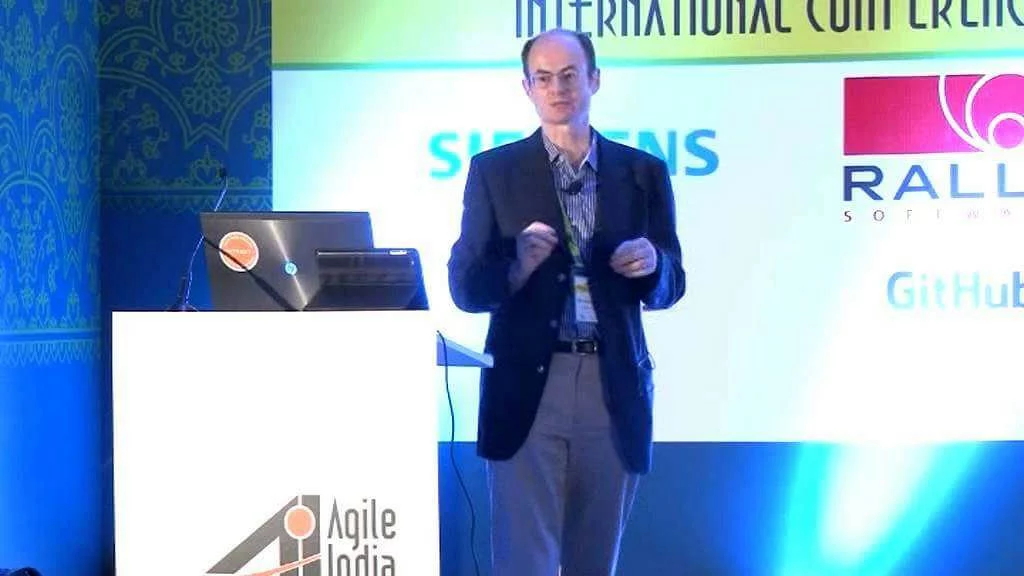
We have held seminars on cultural challenges in IT outsourcing at ABB, Epical, PostNord, Scandinavian Airlines and Kantar-Sifo, as well as at various conferences, and we continuously train our own employees in how to work together. It is not that you cannot succeed without understanding cross-cultural hurdles, but you can succeed so much better. Understanding that an Indian may find it difficult to say no, or that a Swede may be afraid of conflict and therefore under-communicates when dissatisfied, is essential to avoiding unnecessary problems.
Contact us if you are interested in having us train your staff or hold a seminar on the subject.
For more information:
- Read more about the challenges of outsourcing.
- We have also written a few reports that deal with cultural challenges, among other things.
- How to work with virtual teams.
- General information about cultural challenges.
What are cross-cultural hurdles in IT outsourcing—are they the biggest risk?
Cross-cultural hurdles are the collaboration frictions that come from different communication styles, work habits, and native languages. They are usually not the biggest overall outsourcing risk. The biggest hurdles are often unclear expectations, poor requirements, and weak management. But culture can become the biggest specific challenge when teams work across countries and cultures.
Why do misunderstandings happen even when everyone is competent?
Misunderstandings often come from “psychic distance”: people assume the other side sees the world the same way they do. That assumption fails in predictable ways—silence is interpreted differently, politeness can hide risk, and expectations about ownership or escalation vary. The result is friction that looks non-technical but still changes outcomes.
Why is communication described as the real issue in offshore delivery?
Many European organisations no longer doubt that Indian engineers can code. The harder problem is making day-to-day collaboration feel ordinary across different cultures and working habits. When communication works, offshore delivery becomes a quiet advantage. When it doesn’t, it becomes a slow drain on time, trust, and attention — even if technical work is strong.
How does power distance affect Swedish–Indian outsourcing collaboration?
In many Indian IT environments, hierarchy tends to be more explicit, which can make people hesitate to challenge senior decisions or deliver bad news directly. European teams often expect more directness regardless of role. When these expectations collide, politeness may be read as a lack of transparency, and bluntness may be read as disrespect.
How can conflict avoidance create problems on both sides?
Conflict avoidance can produce a “polite fog” where everyone sounds agreeable while the real issue stays untouched. Swedish communication can include quiet disagreement that doesn’t surface early. Combined with face-saving instincts in Indian contexts, teams may avoid the hard conversations needed for alignment. Problems then show up late as rework and mistrust.
Why does uncertainty avoidance change what “done” means?
Higher uncertainty avoidance can drive a preference for clarity, structure, and explicit requirements. Swedish and UK organisations may be more comfortable with ambiguity early and expect to refine together. If one side expects “we’ll iterate” and the other expects “tell me exactly what to do,” it creates a mismatch that looks like poor initiative on one side and poor leadership on the other.
What is the hidden risk when a project looks “green” for weeks?
A project can look fine while small misunderstandings stack up—requirements interpreted slightly differently, questions not asked to avoid seeming difficult, and status reports describing activity rather than outcomes. Then work arrives and teams realise they were never aligned. The cost is more than rework; it’s a loss of confidence that makes every future conversation heavier.
What does a relationship-first approach change in practice?
A relationship-first approach treats collaboration as something you design, operate, and improve—not something you hope will happen naturally. It focuses on clear ownership, making bad news safe to share, defining what status updates must contain, and building a working cadence that supports real coordination. It reduces interpretation, which is where culture quietly enters delivery.
How do you make “bad news” safe and routine in cross-cultural teams?
If problems only appear through escalation, teams learn to hide them. A safer pattern is to ask directly what worries people, reward early warnings even when inconvenient, and rely on small, frequent demos so reality is visible. This matters in European–Indian collaboration because both sides can avoid open conflict in different ways.
What should a good status update include to reduce cultural misreads?
Status updates should report outcomes, not activity. A useful update explains what changed since last time, what decisions were made, what is blocked and what is needed from whom, and what will be shown in the next demo. The goal is to reduce interpretation—because interpretation is where misunderstandings and culture-driven assumptions grow.
What is a “bridge” or blended model, and when is it worth it?
A bridge is someone who understands the client’s business context and communication style and can translate that into actionable direction for an offshore team. A blended model combines local proximity (for context and decisions) with offshore execution (for delivery capacity). It is especially valuable early in an engagement and when the stakes are high.
What questions should you ask before signing an outsourcing agreement?
Ask who will act as your bridge, how misunderstandings will be detected early (demos, written decisions, tight feedback loops), what escalation looks like and how often it is used, how quality is defined and measured, and what happens when requirements are unclear. These questions reveal whether collaboration is treated as part of the delivery system.